
🔊 Control Valve Noise (IEC 60534)
Predict aerodynamic noise levels (dBA at 1 m) generated by gas and steam control valves under subcritical and choked flow per IEC 60534-8-3.
⚡ Fortran 90 Engine
Double Precision (IEEE 754)
✓ ISO / ASME Validated
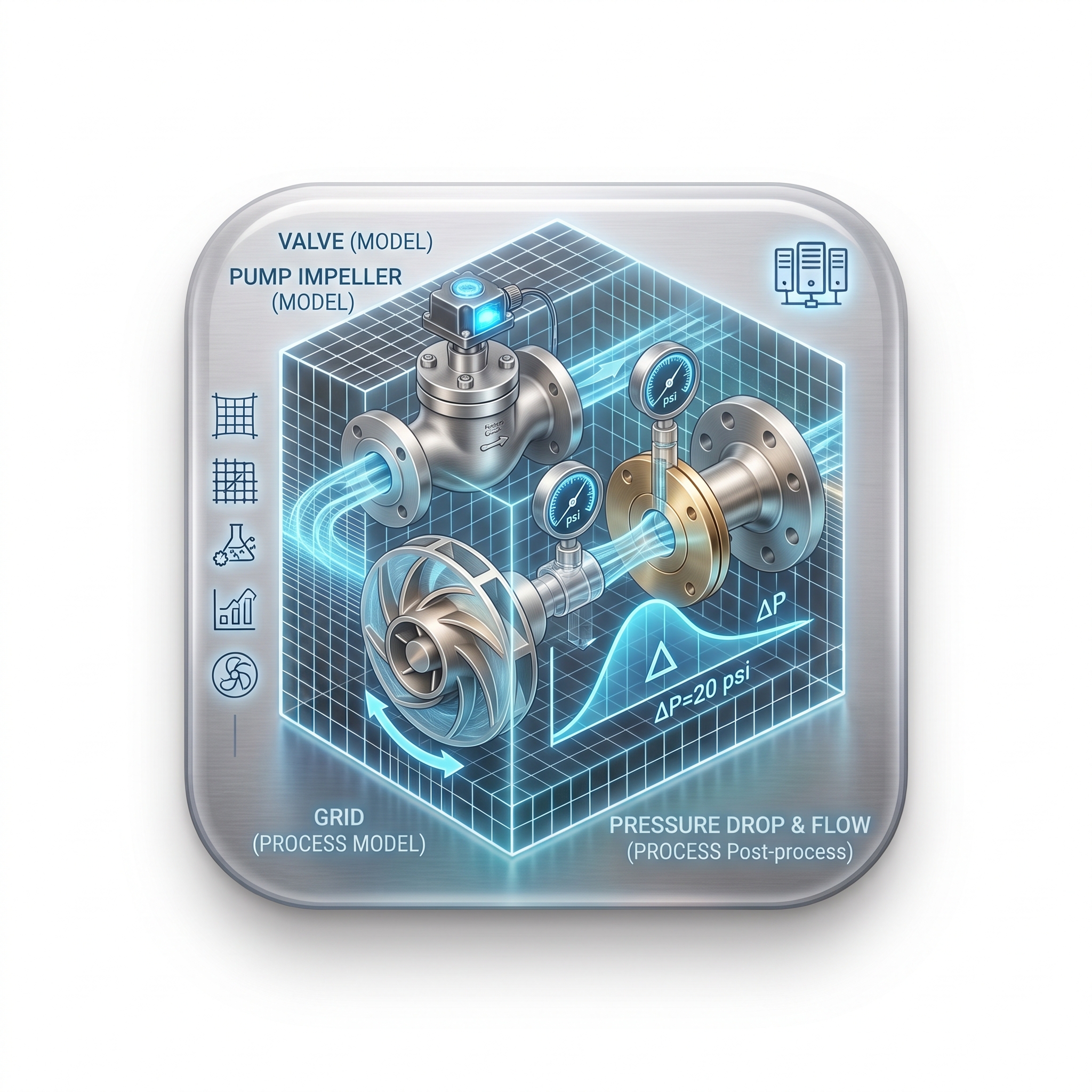 Process
📊 Solver Telemetry
● ACTIVE
💡
Hardware & Sizing Partner: Need to size a control valve or check ASME flange bolt torque for this line?
🔊 Control Valve Sonic Expansion & Acoustic Sound Radiation
Real-time visual simulation of turbulent shear shock cells & acoustic wave transmission📝 Configuration & Presets
🔥 Gas Letdown (60→15 bar)
♨️ Steam Bypass (45→4.5 bar)
💨 Air Blowdown (10→1 bar)
🧪 N₂ Regulator (25→10 bar)
Key IEC 60534-8-3 Formulations:
• Jet Mechanical Power: Wmech = ½ ṁ Ujet²
• Acoustic Power: Wa = ηa · Wmech
• Sound Power Level: Lw = 10 log₁₀(Wa / 10⁻¹²)
• SPL at 1 m: Lp = Lw − TL − 10 log₁₀(2πr) − 5
• Jet Mechanical Power: Wmech = ½ ṁ Ujet²
• Acoustic Power: Wa = ηa · Wmech
• Sound Power Level: Lw = 10 log₁₀(Wa / 10⁻¹²)
• SPL at 1 m: Lp = Lw − TL − 10 log₁₀(2πr) − 5
📊 Acoustic Noise Results
Configure inputs and click Compute to view results.
📘 Calculation Methodology & Engineering Theory
IEC 60534-8-3 Acoustic Modeling
High-velocity gas expansion through valve trim orifices creates turbulent mixing and supersonic shock cells, converting mechanical jet power into acoustic energy:
Wmech = ½ ṁ Ujet², Wa = ηa · Wmech
Pipe Wall Acoustic Attenuation
The pipe wall acts as a mass-law acoustic barrier. Transmission loss $TL$ increases with wall thickness and steel density, attenuating the emitted exterior noise.
Key Engineering Assumptions
- Free-field sound radiation 1 meter from downstream pipe wall.
- A-weighting filter applied according to IEC 61672 standards.
- Clean single-phase gas/vapor flow without liquid entrainment.